
Domino Master - Play Dominoes
TikGames LLCBoard
4.52.84K Reviews
- Version
- 3.63.0
- Installs
- 1.00M
- Age Rating
- Teen
Screenshots
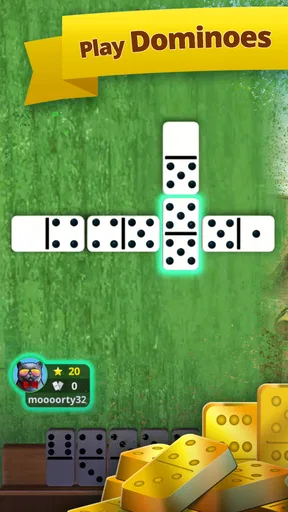



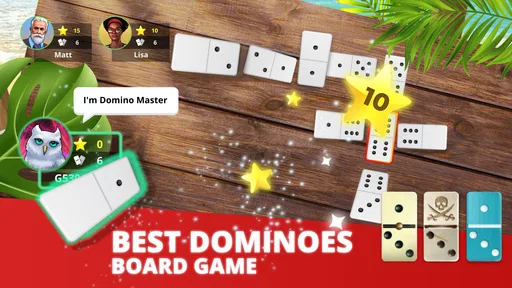
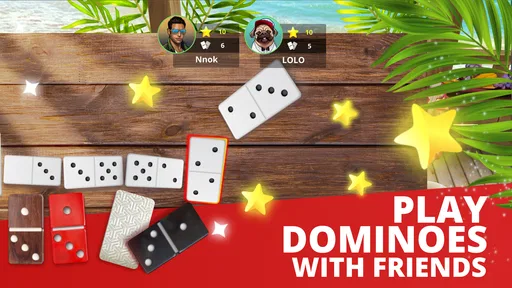

Our Review of Domino Master - Play Dominoes
 Analysis by Appyee
I picked up Domino Master - Play Dominoes because it looks like the kind of board game that can turn a spare ten minutes into a proper little competition. After spending time with it, I found a straightforward domino experience that works especially well when people already know the basic rules and simply want a quick match. It is free to download, belongs to the board-game category, and is made by TikGames LLC. The main appeal is not a huge collection of unrelated activities; it is the familiar rhythm of drawing, matching, blocking, and trying to read the table before someone else does.
That simplicity makes it easy to share on a household device, but it also means the game is best judged by how smoothly it handles ordinary play rather than by the number of extras around it. I like it most when I want a relaxed offline game or a friendly online challenge without learning a complicated new system. At the same time, I would not recommend it automatically to someone looking for a deep strategy platform, a rich family-management tool, or a game with extensive customization.
How it fits into a shared household
The most natural use case is a shared phone or tablet passed between people during a quiet moment. One person can start a match, hand over the device when it is the other player’s turn, and keep the session moving without needing a long explanation. That makes it a good choice for a kitchen table, a waiting room, or a relaxed evening when nobody wants to commit to a long board game.
I found that the short-turn structure is useful in households with different schedules. A player can make a move, put the device down, and return later when the group is ready to continue. That is more practical than a game that demands everyone’s attention continuously. It also suits mixed skill levels: an experienced domino player can think about blocking and counting, while a beginner can focus on matching tiles and learn through the flow of a real game.
There is a small social advantage to having both offline and online play available. Offline play is the better option when everyone is in the same room and you want the device to act like a digital tabletop. Online play makes more sense when the person you want to challenge is elsewhere. In both cases, I would agree on whose turn it is before passing the device around, especially with younger players or several people sharing one screen. That simple habit prevents accidental moves and keeps the match friendly.
The game also works for a quick one-person break, although its strongest personality comes from competition. If I only have a few minutes, I can start a match without preparing cards, pieces, or a physical board. If I have more time, I can treat the game as a way to practice recognizing open ends and remembering which tiles have already appeared. That second use is easy to overlook: digital dominoes can be casual entertainment and a small exercise in attention at the same time.
What the table experience feels like
The core loop is pleasantly recognizable. I look at the available ends, decide whether to play a useful tile now or hold it for later, and watch how the layout changes after every move. A strong move is not always the one that fits immediately. Sometimes it is better to preserve a flexible tile, avoid opening a number that helps the opponent, or force the table toward a pattern that leaves me with fewer awkward options.
That is where the game has more substance than its simple presentation suggests. New players can treat it as matching shapes and numbers, but regular players will naturally start thinking about probability and memory. I recommend paying attention to tiles that could have been played but were not. A pass or a delayed response can reveal useful information about what another player is holding, particularly in a close match.
One practical tip is to avoid spending every convenient tile as soon as it becomes playable. Keeping a tile that can connect to several possible ends gives me room to respond later. Another is to notice when the board is becoming narrow. If only one number remains useful, the player who controls that number can gain a large advantage. These are not complicated tactics, but they make the difference between randomly placing tiles and deliberately shaping the game.
Setup, boundaries, and everyday coordination
Because this is a free game, the initial decision is easy: there is no purchase required to try it. The more important setup question for a shared device is who will use it and how online matches will be handled. I would install it on the device that people actually pass around, then decide whether the household wants casual local sessions, separate online challenges, or a mixture of both.
That boundary matters because a shared device can blur personal activity. If several people take turns using the same installation, it is sensible to agree that nobody starts or joins a match under another person’s name without asking. I would also avoid assuming that a match belongs to the person holding the device at that moment. A quick verbal check—“Is this your game or mine?”—is enough to prevent confusion when several players use the same screen.
The game is free, but it includes optional in-app purchases ranging from $0.99 to $99.99 per item. That is the one setup detail I would discuss before handing the device to a child or leaving it available for unsupervised use. I would not treat a free download as proof that every action inside the game is free. A household should use the device’s normal purchase protections and make sure everyone understands who is allowed to approve spending.
This is also where the difference between a personal phone and a family tablet becomes important. On a personal device, the owner can manage purchases and online play according to their own habits. On a shared tablet, the owner should explain those boundaries clearly. I would not create a complicated rulebook; I would simply establish that purchases need permission and that online invitations or matches should be discussed when the device is shared.
There is no need to over-organize ordinary offline play. In fact, too much coordination would work against the game’s best quality, which is its low friction. A useful routine is to choose one person to start the match, keep the device in a central place, and let players announce when they have finished a move. If the group is distracted, announcing the played tile aloud helps everyone follow the position and reduces accidental taps.
Offline and online play serve different households
Offline play is the better fit for a family or group sitting together. It keeps the social part visible, makes it easier to explain a rule, and avoids the awkwardness of one person wondering whether an opponent is still active. It is also the mode I would choose for introducing a beginner, because another player can talk through the reasoning behind each move.
Online play is more useful for friends or relatives who are not in the same room. It extends the game beyond the household, but it also requires more trust and patience. A remote opponent may not be ready at the same time, and a shared-device player may need to coordinate access with everyone else. I would choose online matches when the relationship already has a reliable way to communicate, rather than expecting the game alone to organize the social details.
For a busy home, the best arrangement may be to keep offline matches spontaneous and reserve online play for planned challenges. That avoids turning the tablet into a source of arguments about whose turn it is. A simple message before starting—“I am opening a game now; does anyone need the device?”—can be more valuable than any extra game feature.
Age, trust, and who should use it
The listed content rating is Teen, so I would not present this as an automatically suitable game for every child. The rating is a useful reminder that age context matters even when the basic activity is a familiar board game. Parents and guardians should make their own decision based on the child, the device, and whether online interaction or optional purchases are appropriate in their home.
For teenagers and adults, the game is easy to understand and does not require a large time investment. It can be a gentle way to introduce someone to domino strategy without buying a physical set. I especially like it for relatives who already enjoy classic board games but do not want a complicated interface. The familiar rules lower the learning curve, while online play gives experienced players a way to challenge someone outside the room.
Trust becomes more important when several people use one installation. I would keep personal accounts and personal matches separate where the device and game setup allow it, and I would avoid sharing sign-in details casually. I would also explain that a match can reflect the actions of whoever is currently using the device. That is obvious to an adult, but younger players may not realize that starting a game, spending money, or accepting a challenge can affect someone else’s experience.
For younger children who are still learning turn-taking, the offline mode can be a useful shared activity when an adult is present. The adult can encourage the child to describe why a tile fits instead of simply tapping the first available move. That turns the game into a small lesson in patience, planning, and accepting a loss. I would not leave the child to navigate the wider experience without checking the device’s purchase and communication settings first.
Where it compares well, and where it does not
Compared with a physical domino set, this game wins on convenience. There are no pieces to lose, no table space to clear, and no need to remember which tile was left under a chair. It is also easier to start a match when nobody has brought a set along. The trade-off is that digital play does not provide the same tactile feeling or the same natural conversation around a real tabletop.
Compared with a general board-game collection, it is narrower but more focused. A collection gives a household more variety, while this title gives domino fans a quicker route to the game they already want. I prefer this focused approach when I am in the mood for dominoes specifically. If the group frequently changes from cards to puzzles to strategy games, a broader app may offer better value in terms of variety.
Compared with playing dominoes through a social platform or a more competitive online service, this feels more approachable. Someone who knows the traditional game can start without studying a large ecosystem. The limitation is that players seeking detailed competitive tools, extensive ranking systems, or a highly specialized tournament environment may find the experience too simple. I would choose a dedicated competitive alternative for serious organized play, but I would choose this one for quick matches with friends.
Another trade-off is the presence of optional purchases. A physical set has a one-time ownership model, while a free mobile game may place more emphasis on optional spending. That does not make the game unsuitable, but it changes how I would use it in a household. I would enjoy the free entry, then keep purchase approval firmly with the device owner.
Performance expectations and practical habits
The current version is 3.63.0, and the game supports devices running Android 7.0 or later. That makes it accessible to many older Android devices, though I would still keep the operating system and the app updated when possible. On a shared device, updates are especially worthwhile because several people may depend on the same installation and nobody wants a match interrupted by avoidable maintenance.
The game has been available since Jan 8, 2018, which helps explain why its identity is built around a familiar format rather than a short-lived novelty. It has reached over one million installs, with an average rating of 4.5 from around sixteen thousand ratings and roughly 2.8 thousand written reviews. Those figures suggest a well-established audience, but I would still treat them as a starting point rather than a guarantee that every household will enjoy the same style of play.
One habit I recommend is using the first few matches to learn the interface rather than trying to play perfectly. Notice how the board presents playable options, how turns are passed, and how the game handles the end of a round. Once that feels natural, start thinking about tile management. The biggest improvement usually comes from slowing down for a few seconds before committing a move, not from searching for a hidden trick.
For shared use, I would also keep the device charged and place it somewhere that all players can see. That sounds mundane, but digital board games are more enjoyable when the screen is stable and nobody has to interrupt the match to find a charger. If the household uses a phone rather than a tablet, passing it between turns may feel less comfortable, so a stand or central seat can make the session smoother.
My household verdict
After using it as both a quick solo diversion and a shared domino table, I see Domino Master - Play Dominoes as a practical choice for people who want familiar board-game play without carrying a physical set. Its strongest qualities are the recognizable rules, the option to play offline or online, and the low barrier to starting a match. It fits a household that values short sessions and already has at least two people interested in dominoes.
I would recommend it to a friend who wants a simple way to challenge relatives, practice basic strategy, or fill an awkward gap in the day. I would also recommend discussing purchase boundaries before installing it on a shared device, because the free price does not remove the need for responsible account and spending habits. The Teen content rating is another reason to make the choice deliberately rather than treating it as a universal children’s game.
I would skip it if the main goal is a broad collection of board games, a tactile physical experience, or a highly structured competitive community. I would also look elsewhere if household members dislike passing one device around or if nobody wants to coordinate online turns. In those situations, a physical domino set or a broader board-game app may be a better fit.
For everyone else, this is an easy game to keep available for the right moment. Start with an offline match when people are together, agree on purchase and account boundaries, and let the strategy grow naturally from the basic matching rules. My final view is positive but measured: the best reason to install it is its dependable, low-effort domino table, not a promise of endless extras. That focus is exactly what makes it useful in a shared household.
Verdict
Strengths of Domino Master - Play Dominoes
- Simple controls make matches easy to learn on mobile.
- Online multiplayer provides competitive games against real opponents.
- Several domino modes offer variety beyond standard matches.
- Quick rounds suit short play sessions during breaks.
- Clean board layout keeps tiles and scores easy to follow.
Limitations of Domino Master - Play Dominoes
- Online features may depend heavily on a stable internet connection.
- Matchmaking quality can vary depending on player availability.
- Some features or items may require in-app purchases.
- Ads may interrupt play in the free version.
- Limited strategic depth may disappoint experienced domino players.
Similar Picks in This Category
View All
Ludo King®
Gametion4.1

Ludo
Yarsa Games4.6

Tile Master® - Matching Game
Higgs Studio3.6

Checkers Online
CC Games4.6

Dominoes
Loop Games4.7

Chess
Chess Prince4.6
Frequently Asked Questions
What is Domino Master - Play Dominoes?
Domino Master - Play Dominoes is a digital domino game designed for mobile devices. It lets you play classic domino matches against computer-controlled opponents or, depending on the available options, other players. The app typically includes familiar rules, simple tap-based controls, score tracking, and a casual interface suitable for short games. It is aimed at both beginners learning dominoes and experienced players looking for quick matches.
Can I play Domino Master - Play Dominoes offline?
The availability of offline play may depend on the specific game mode and version installed on your Android or iOS device. In general, single-player matches against artificial intelligence are the most likely to work without a constant internet connection, while online multiplayer, advertisements, account features, and leaderboards usually require access to the internet. It is worth checking the mode descriptions before starting a match.
Is Domino Master - Play Dominoes free to download?
Domino Master - Play Dominoes can generally be downloaded without an upfront purchase, but free access may include advertising, optional in-app purchases, or limitations on certain features. Before installing, review the store listing for current pricing information and available purchases. If the app offers coins, boosters, cosmetic items, or ad-removal options, these should be treated as optional rather than necessary for understanding the basic domino gameplay.
Does the game support different domino rules or multiplayer modes?
The game may offer more than one way to play, such as classic dominoes, draw-style matches, block rules, challenges, or competitive game modes. However, the exact selection can vary by platform and app version. Multiplayer features may include online opponents, matchmaking, private rooms, or local play where supported. New users should explore the settings and mode menus carefully because rules, scoring, and turn limits can differ.
Is Domino Master - Play Dominoes suitable for beginners?
Yes, the game is generally approachable for beginners because domino pieces are presented visually and turns are controlled through simple taps. New players can usually learn by following the available tutorial, hints, or on-screen prompts, while computer opponents provide a convenient way to practice without pressure. Beginners should still review how matching, drawing, scoring, and winning conditions work, since these rules may change between game modes.
Play our best games!


